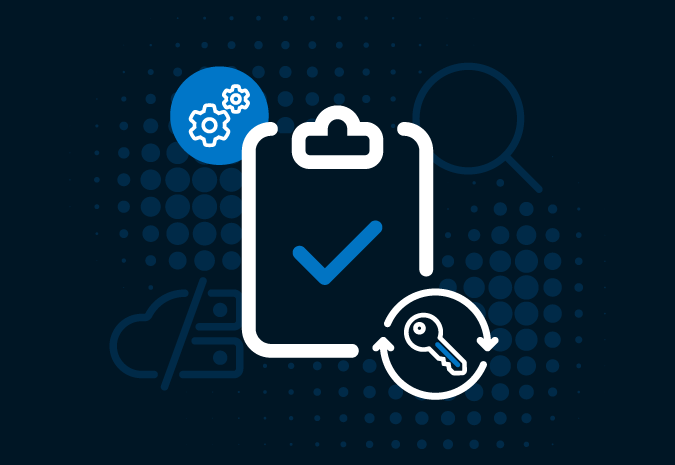
For years, internal PKI was viewed as a behind-the-scenes technology used primarily to secure devices and support Active Directory. Today, that view is outdated.
Modern enterprises rely on internal PKI to establish trust across virtually every part of their infrastructure: from cloud workloads and Kubernetes clusters to APIs, DevOps pipelines, and machine identities. Yet many organizations still manage their PKI with fragmented architectures, manual processes, and legacy technologies that weren't designed for today's business realities.
Whether you're evaluating your current PKI or planning for the future, these five essentials can help you build a more secure, scalable, and resilient foundation.
Essential #1: Know the full scope of your internal PKI
The biggest misconception about internal PKI is that it exists primarily to issue certificates for devices.
In reality, internal PKI underpins:
- Servers
- Active Directory
- WiFi and VPNs
- Kubernetes
- APIs
- Containers
- Service mesh
- DevOps pipelines
- Databases
- OT environments
- Code signing
- Every machine identity that needs trusted authentication
You can't secure or modernize what you don't fully understand.
Essential #2: Eliminate PKI silos
Very few enterprises have one internal PKI. Most have multiple trust domains that have grown organically, including:
- Microsoft CA
- Cloud-native certificate services
- Kubernetes cert-manager
- OpenSSL-based deployments
- Application-specific PKIs
- Separate PKIs managed by different business units
Having multiple internal PKIs makes managing certificates more difficult. More importantly, it makes managing trust consistently across all of them impossible. Modern PKI is as much about governance as it is certificate issuance.
Essential #3: Replace manual processes with automation
Manual certificate management may have worked when organizations managed tens or hundreds of certificates. But today, many manage hundreds of thousands upon thousands.
Manual renewal processes create:
- Outages
- Operational overhead
- Security risk
- Compliance challenges
Automation isn't simply about efficiency. It's how organizations reduce risk while keeping pace with modern infrastructure. If certificate management in your organization still depends on spreadsheets, scripts, or calendar reminders, it's time to modernize.
Essential #4: Build for dynamic infrastructure
Internal PKI’s original use cases were designed for relatively static environments. But today’s environments are anything but static.
Cloud, hybrid infrastructure, containers, ephemeral workloads, and DevOps require PKI that can issue, renew, revoke, and govern certificates automatically, at scale, and often for very brief certificate lifecycles.
Your PKI architecture needs to enable your business, not hinder it. Modernizing PKI is about recognizing PKI’s role as a core business capability.
Essential #5: Treat internal PKI as strategic security infrastructure
Internal PKI is no longer just an IT service. It enables:
- Zero Trust architectures
- Machine identity management
- Enterprise resilience
- Regulatory compliance
- Crypto-agility and post-quantum readiness
Organizations that view PKI as strategic infrastructure are better positioned to adapt to whatever comes next.
A quick PKI reality check
How many of these statements describe your organization?
- We know every internal CA operating across the business.
- We have visibility into every internal certificate.
- Certificate renewals are fully automated.
- Our PKI supports hybrid, cloud, and Kubernetes environments.
- We could migrate from our existing PKI without significant disruption.
If you answered "no" or "not sure" to two or more of these statements, your organization likely has opportunities to modernize its internal PKI.
Start your modernization journey
For many enterprises, the journey begins with understanding whether their existing Microsoft CA deployment can continue to meet the demands of modern infrastructure—and what it takes to successfully modernize when it's time to move forward.
Explore DigiCert Private CA to learn more about how we can help you modernize your internal PKI.
Featured Stories
DigiCert’s 2029 post-quantum infrastructure migration plan
.png)
Certificate lifecycle management reaches an inflection point
Subscribe to the blog
-

DigiCert is a global leader in intelligent trust, securing people, data, and devices with AI-powered solutions built to stop threats today and prepare for a quantum-safe future.
-



-
© 2026 DigiCert, Inc. All rights reserved.
Legal Repository Audits & Certifications Terms of Use Privacy Center Accessibility Cookie Settings