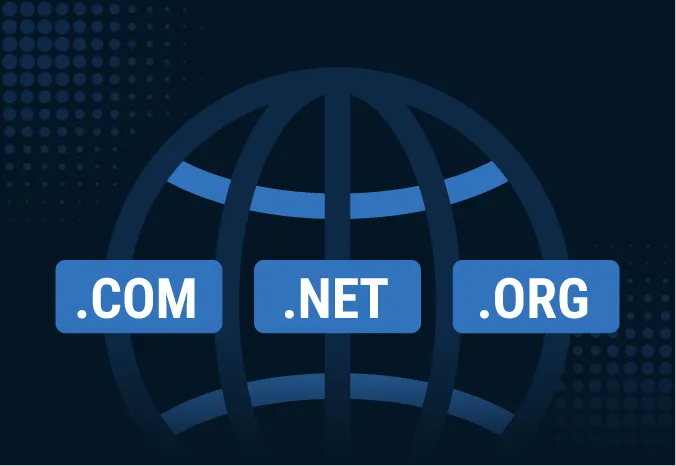
The internet is entering a new phase of expansion, and with it comes a shift in how organizations define identity online. In April 2026, the Internet Corporation for Assigned Names and Numbers (ICANN) will open a new application round for generic top-level domains (gTLDs)—the first since 2012.
Top-level domains are more than just the end of a URL. They play a critical role in brand identity, trust, and discoverability. As the number of domains grows, so does the importance of managing them securely and at scale.
What are new gTLDs?
A generic top-level domain (gTLD) is the final segment of a domain name, such as .com or .org. The 2012 New gTLD Program significantly expanded this system, introducing more than 1,200 new domain options, including names like .futbol and .pizza, as well as internationalized domain names (IDNs) that support non-Latin scripts.
This expansion increased competition and gave organizations more flexibility in how they present themselves online. It also marked a shift toward greater global accessibility, allowing brands and communities to operate in their native languages and contexts.
The 2026 ICANN application round
The upcoming 2026 round builds on the foundation established in 2012, with updated requirements and a renewed focus on scalability and accessibility. Organizations applying for a gTLD must demonstrate both financial and technical capability, which has made partnerships with experienced infrastructure providers increasingly important.
All applicants must identify their registry service provider (RSP) as part of the process. This requirement is defined in the ICANN Applicant Guidebook, which outlines the evaluation criteria and delegation process for new gTLDs.
The role of registry service providers
RSPs are responsible for operating the technical infrastructure behind top-level domains. This includes DNS resolution, domain registration systems, and ensuring high levels of availability and security.
ICANN’s Registry Service Provider Evaluation Program exists to validate these providers. It ensures that organizations applying for gTLDs can rely on partners that meet strict operational and technical standards, even if they don't manage the infrastructure themselves.
DigiCert’s role in the gTLD ecosystem
DigiCert has been approved to participate in ICANN’s RSP Evaluation Program and has successfully cleared the RSP evaluation to be a DNS provider, reflecting its role in supporting critical internet infrastructure.
DigiCert UltraDNS currently supports more than 120 top-level domains, including high-volume and widely recognized TLDs. This scale enables consistent performance and resilience across global environments.
At the same time, domain infrastructure is no longer limited to DNS. Identity, encryption, and email authentication increasingly converge at the domain level. DigiCert brings these elements together through UltraDNS, DigiCert ONE, and Valimail, forming a more integrated approach to digital trust.
Why this matters for digital trust
Domain names now function as anchors of digital identity. Every domain must be resolvable, authenticated, and protected against misuse.
The expansion of gTLDs increases both opportunity and complexity. More domains mean more identities to secure—and more potential points of failure if trust isn’t managed holistically.
An integrated approach that connects DNS, PKI, and email authentication helps reduce these risks. It also creates a stronger, more resilient foundation for digital trust as the internet continues to grow.
Preparing for the next expansion
The 2026 gTLD round represents a new opportunity for organizations to shape their presence on the internet. But success will depend on more than securing a domain. It will require the ability to operate that domain securely, reliably, and at scale.
As the internet expands, digital trust becomes both more complex and more essential. Organizations that plan for this shift now will be better positioned to adapt to what comes next.
Planning for the 2026 gTLD round? See how DigiCert can help you build, secure, and operate domain infrastructure at scale.
Featured Stories
DigiCert’s 2029 post-quantum infrastructure migration plan
.png)
Certificate lifecycle management reaches an inflection point
Subscribe to the blog
-

DigiCert is a global leader in intelligent trust, securing people, data, and devices with AI-powered solutions built to stop threats today and prepare for a quantum-safe future.
-



-
© 2026 DigiCert, Inc. All rights reserved.
Legal Repository Audits & Certifications Terms of Use Privacy Center Accessibility Cookie Settings